AI Agent vs Chatbot: What's the Real Difference?
"Chatbot" and "AI agent" get used interchangeably. They shouldn't. Here's the technical and business difference — and when each is the right choice.
The words "chatbot" and "AI agent" are used interchangeably in vendor decks, but they describe very different things — and confusing them will cost you either budget or capability. This is the plain-English distinction and the decision framework we use with clients.
The definitions that actually hold up
A chatbot is a scripted or narrowly-generative conversational interface. It answers questions from a bounded knowledge set and follows pre-defined flows. Even LLM-powered chatbots typically don't take actions — they respond and stop.
An AI agent is a system that pursues a goal using tools. It plans, acts, observes the result, and iterates until the task is complete or it hits a stop condition. The interface may be conversational or entirely headless.
Three technical dimensions
Autonomy: chatbots follow a script; agents make decisions. Tool use: chatbots retrieve information; agents call APIs that change state. Persistence: chatbots forget between sessions; agents carry state across steps and often across sessions.
This is why an agent can "handle the refund" while a chatbot can only "tell you where to request one." The intelligence difference is real but the capability difference is bigger.
When a chatbot is the right answer
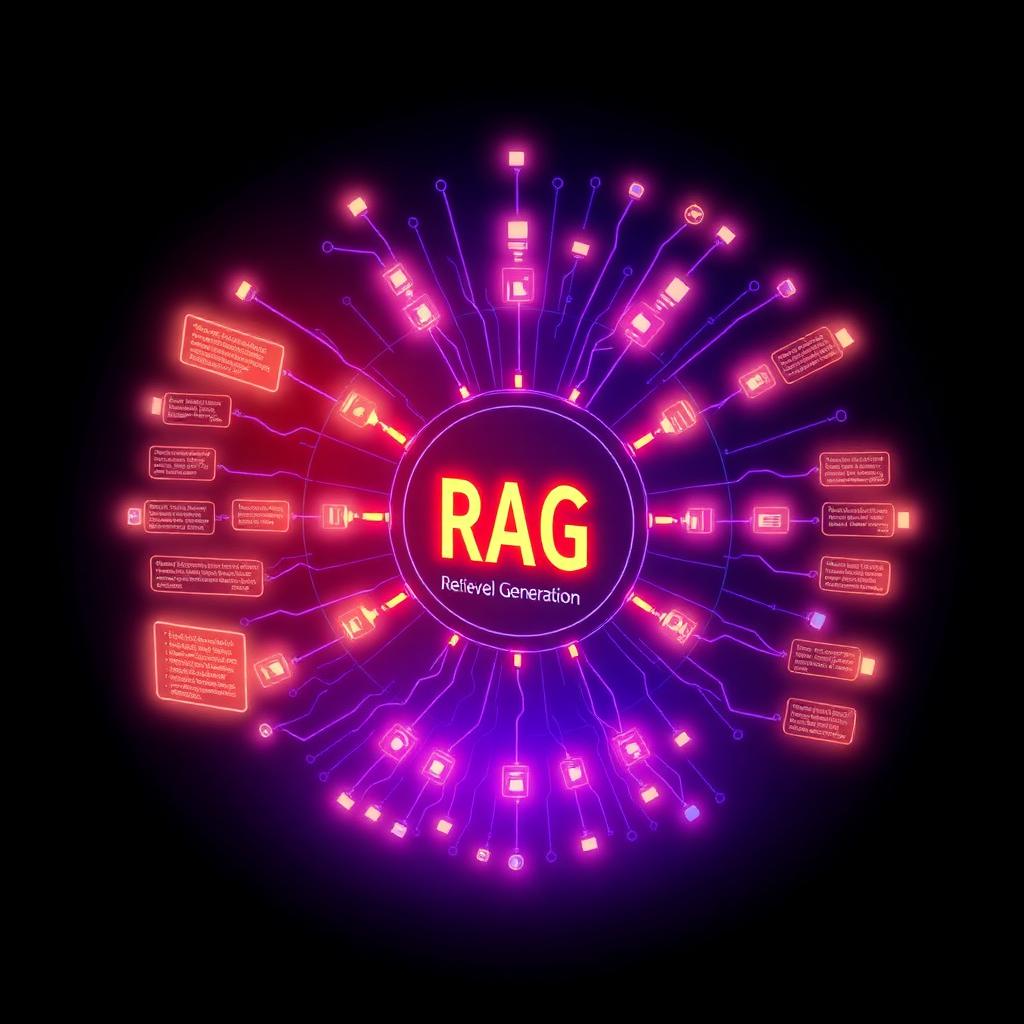
Bounded FAQ with occasional handoff, no need to touch backend systems, and low tolerance for unpredictable behavior. Legal, healthcare intake, regulated financial disclosures — anywhere the safest thing an AI can do is retrieve and cite. A well-tuned chatbot with RAG covers 80% of what most companies actually need on their website.
When you actually need an agent
Multi-step workflows, cross-system actions, personalization based on live state. Support that closes tickets end-to-end. Ops workflows that coordinate across CRM, billing, and email. Sales agents that qualify, book, and log. If the outcome you want ends with something changing in one of your systems, you need an agent.
- Chatbot: read-only, single-turn, low risk
- Agent: read-write, multi-step, tool-driven
- Hybrid: chatbot front-end that escalates to agent tools for known intents
Cost, complexity, and time to value
A production chatbot with RAG ships in 2–4 weeks and costs a few thousand dollars per month to run. A production agent with tool integrations and guardrails is 8–16 weeks and 3–10x the run cost. The ROI on an agent is proportionally larger because it displaces work rather than answering questions.
The right question isn't "agent or chatbot" — it's "which of my workflows justify agent-level investment, and which don't?" Most companies need both.
Buy, build, or partner
Buy when your requirement is genuinely standard and a vendor already solves it for thousands of companies with the same shape. You will trade configurability for speed and that is often the right trade. The warning sign is a procurement process where half the requirements list is described by the vendor as "on the roadmap" — you are buying a custom build with none of the control.
Build when the workflow is a differentiator, when your data model does not fit anyone's off-the-shelf schema, or when the integration surface is unusual enough that you would spend the licence fee on workarounds anyway. Building is also the right answer when the economics scale with usage: a system you own has a marginal cost curve that flattens, whereas per-seat or per-resolution pricing does not.
Partner when you want the ownership of a build without hiring a permanent team for a six-month problem. That is the model we run at CapraZone: a scoped delivery with a full handover, documentation, and the option of ongoing operations. If you are weighing the three paths for ai agent vs chatbot, the fastest way to a defensible answer is a two-week discovery — get in touch and we will run one.
- Buy: standard requirement, speed over configurability
- Build: differentiating workflow or unusual data model
- Partner: build-grade ownership without permanent headcount
- Decide with a two-week discovery, not a twelve-week RFP
Where the value actually comes from
Teams evaluating ai agent vs chatbot usually start with a tooling question — which platform, which model, which vendor. That is the wrong first question. Value in this category comes from three compounding sources, and none of them are the tool itself: the volume of repetitive decisions you can move off human queues, the latency you remove between an event happening and someone responding to it, and the consistency you gain when the same policy is applied to every case rather than the version each operator remembers.
Quantify those three before you shortlist anything. Count the decisions per week, measure the median response delay, and sample fifty recent cases to see how often the handling actually matched policy. In most organisations that exercise alone surfaces a number large enough to fund the entire programme, and it reframes the project from "we should try AI" to "we are losing a specific, measured amount of margin every week and here is the mechanism".
The second reframing matters just as much. AI Agent vs Chatbot is not a replacement programme; it is a capacity programme. The teams that get the strongest returns keep headcount flat and redeploy the recovered hours into work that was permanently backlogged — win-back campaigns, data hygiene, proactive outreach, quality review. That is where the compounding shows up in the P&L, and it is why our AI agent engineering practice scopes every engagement around a redeployment plan rather than a reduction target.
- Decisions per week that follow a documented rule
- Median delay between trigger event and first response
- Policy-adherence rate across a fifty-case sample
- Cost per handled case, fully loaded
- Backlogged work you would fund with recovered hours
Reference architecture
A durable implementation separates four layers, and keeping them separate is what lets you swap any one of them later without a rebuild. The ingestion layer normalises inbound events — webhooks, form posts, inbox messages, database change feeds — into a single typed envelope. The context layer resolves that envelope against your systems of record so every downstream decision sees the same customer, account and history. The decision layer applies policy and, where appropriate, model reasoning. The action layer writes back through the same APIs a human would use, so nothing bypasses your existing validation.
Between the decision and action layers sits the part most teams under-build: the control plane. Confidence thresholds, value caps, allow-lists of permitted tools, idempotency keys, and a full audit record for every attempt including the ones that were blocked. Without it you cannot answer the two questions leadership will ask in month two — what did it do, and what stopped it doing something worse.
We build these systems on boring, well-understood infrastructure: a typed API surface, a Postgres system of record with row-level security, queue-backed workers for anything long-running, and structured event logs streamed into whatever observability stack you already pay for. The interesting part of ai agent vs chatbot should be the domain logic, not the plumbing. Our engineering team and our product partners at Evron Studio use the same stack across every build for exactly this reason.
- Ingestion — normalise every trigger into one typed envelope
- Context — resolve identity and history before deciding
- Decision — policy first, model reasoning second
- Control plane — thresholds, caps, allow-lists, idempotency
- Action — write back through existing validated APIs
Frequently asked questions
Is ChatGPT an AI agent?
ChatGPT with browsing, code interpreter, and connectors is agent-shaped. The plain chat interface is closer to a chatbot. The line is whether it uses tools autonomously to accomplish a goal.
Can I upgrade a chatbot to an agent later?
Yes, but usually easier to rebuild. Chatbot architectures assume single-turn stateless responses; agents assume persistent state and tool use. Migrating is often more work than starting fresh.
Which is cheaper to run?
Chatbots. Fewer tokens, no tool invocations, simpler infra. But comparing cost without comparing outcomes is misleading — agents pay back through work displaced, not conversations handled.
Do we need both?
Usually. A chatbot on the marketing site for anonymous visitors, an agent in the authenticated product where you can call APIs safely on the user's behalf.
What is the smallest useful first version of ai agent vs chatbot?
A single high-volume category, handled in suggest-only mode on live traffic, with every human correction captured as a labelled example. That version is typically live in three to four weeks and already saves drafting time while it earns the data for autonomy.
How do we avoid getting locked into one model or vendor?
Keep policy, retrieval and orchestration in your own code and treat the model as a swappable component behind an interface. Maintain an evaluation set so switching is a measured decision rather than a leap of faith.
What does CapraZone actually deliver at handover?
Source code, infrastructure as code, the evaluation suite, the observability dashboard, runbooks for every failure mode, and a training session for the internal owner. You can operate it without us, and many clients do.