AI Agents for Tax Preparation Firms
A production guide to ai tax prep — architecture, KPIs, rollout, and failure modes.

Ai tax prep is one of the highest-leverage plays we see teams run in 2026. This deep dive covers how CapraZone ships production systems for tax preparation — architecture, KPIs, rollout, and the gotchas.
We build these systems on the same stack our partners at [Evron Studio](https://evronstudio.com) and [Evron Desk](https://evrondesk.com) run in production.
By the end you'll have a concrete plan for tax preparation that avoids the usual v1 traps.
Why tax preparation is different now
Traditional tooling for tax preparation was built around human throughput. In 2026, the constraint has moved to workflow design and data quality. Teams that recognize this reset their roadmap around ai tax prep as an operating layer, not a bolt-on feature.
The unlock is compounding: once one workflow inside tax preparation runs autonomously, adjacent workflows get cheaper to automate because the data model, evals, and guardrails are already in place.
- Data model owns tax preparation, not the tool
- Guardrails are policy code, not prompts
- Escalation on confidence, not keywords
- Compounding automation across adjacent workflows
Reference architecture
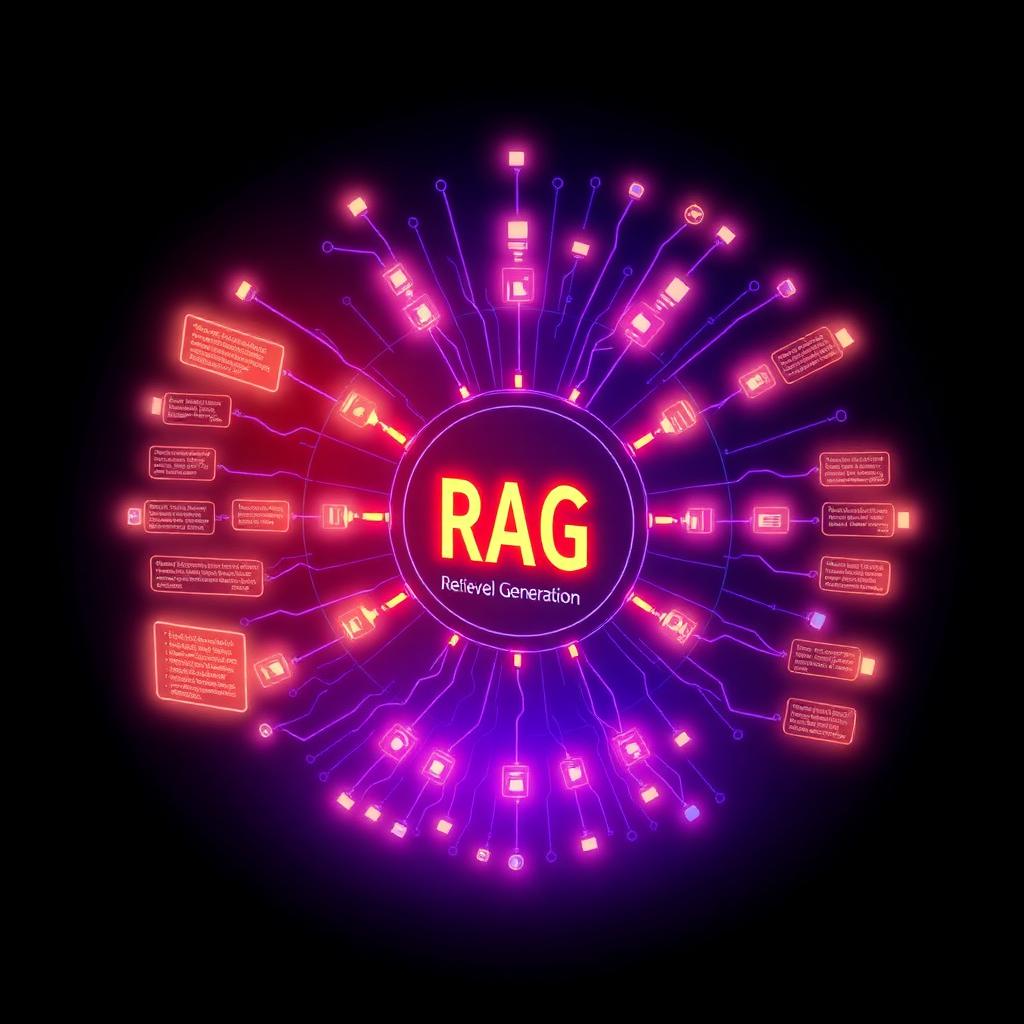
The stack we ship for ai tax prep: ingestion (webhook + email + voice), retrieval (hybrid search + reranker), reasoning (routed model tier), action (typed API tools with idempotency), and observability (traces, evals, human review queues).
Retrieval quality is where most projects live or die. Chunking, embedding choice, and hybrid keyword+vector matter more than the reasoning model.
- Ingestion: schema-validated multi-channel
- Retrieval: hybrid + reranker
- Reasoning: routed models (small/medium/large)
- Action: typed tools with idempotency keys
- Observability: traces + evals + human queue
KPIs for tax preparation
Ignore model-level metrics. Track business outcomes: resolution rate, cost per successful action, escalation quality, and CSAT delta vs a control cohort.
For tax preparation, watch silent failures — cases where the agent completed a task but the downstream system didn't reflect the change. Reconciliation jobs catch these.
- Resolution rate per workflow
- Cost per successful action
- Escalation rate + quality
- CSAT / NPS delta vs control
- Silent-failure rate
90-day rollout plan
Weeks 1-2: shadow mode. The agent runs in parallel with humans but writes nothing. Weeks 3-4: co-pilot mode with human approval. Weeks 5+: autonomous with a review queue for low-confidence cases. Only then expand to adjacent workflows in tax preparation.
Most teams stall by trying to boil the ocean. Wedge deployments hit ROI faster and build the org muscle for the next automation.
- Wk 1-2: shadow, no writes
- Wk 3-4: co-pilot, human approves
- Wk 5+: autonomous with review
- Expand after KPI target hit
Common failure modes
Over-scoped v1, missing evals, no rollback. Each is preventable in a week of upfront design.
The trap specific to ai tax prep: assuming the existing process is documented. It rarely is — interview tenured operators before writing the first prompt.
- Scope creep in v1
- No offline eval suite (build 50 golden cases)
- No kill switch or rollback path
- Prompts written without operator input
Team, ownership and change management
The staffing pattern that works is small and cross-functional: one engineer who owns the integrations and control plane, one domain expert who owns the policy and reviews the weekly sample, and one accountable owner with the authority to change the underlying process. Three people with clear decision rights consistently outperform a large steering committee, because most of the work is judgement calls that need to be made in hours rather than at the next fortnightly meeting.
Change management is 40% of the outcome and gets 5% of the planning. Bring the operators in during discovery, not at launch. Show them that the first release drafts their work rather than grading it. Give them a one-click override and treat every override as a bug report against the policy, not as user error. Teams that do this see adoption in weeks; teams that announce the system by email see quiet sabotage for months.
Finally, decide up front who owns the system after go-live. An unowned automation is a liability the moment an upstream API changes. If you do not have internal capacity, that is a legitimate reason to use a managed partner — our AI agent engineering practice runs post-launch operations for clients in exactly that position, and Evron Desk covers the frontline support layer alongside it.
- One engineer, one domain owner, one accountable executive
- Involve operators during discovery, not at launch
- Treat every override as a policy bug
- Name a post-launch owner before you go live
Failure modes we see repeatedly
The over-scoped version one. A team tries to cover every case in the first release, spends five months building, and ships something that is mediocre everywhere instead of excellent in one place. The counter is a wedge: pick the single highest-volume, lowest-risk category and be genuinely better than the status quo at it before touching anything else.
The missing evaluation set. Without fifty to two hundred golden cases with known-correct handling, every change becomes a vibe check and every regression ships. Build the eval set during discovery from real historical cases, including the ugly ones, and run it on every deployment. It is a day of work that pays back within a fortnight.
The undocumented process. Teams assume the current workflow is written down somewhere. It almost never is — the real rules live in the heads of two or three tenured operators. Interview them before you write a single instruction, and expect to discover legitimate exceptions that no policy document mentions. Those exceptions are usually where the actual customer value is, and encoding them badly is how ai tax prep projects lose trust in week one.
- Scope creep in version one
- No golden-case evaluation set
- No kill switch or rollback path
- Policy written without operator input
- Success measured on activity rather than outcomes
- No named owner after launch
How this connects to the rest of your stack
Nothing in this category delivers standalone value. The returns come from the connections: to the CRM that holds the commercial truth, to the ticketing or job-management system where the work lives, to billing, and to the data warehouse where you will eventually want to analyse all of it together. Plan those integrations as first-class scope with their own testing, not as a final-week task.
The most common ordering mistake is automating on top of broken data. If ownership, stage definitions or lifecycle statuses are inconsistent, an automated system will apply that inconsistency faster and at greater volume. Two weeks of data remediation before launch reliably beats two quarters of explaining anomalous outputs. Our revenue operations team usually runs that remediation in parallel with the build.
Think about the second and third use case while designing the first. If the ingestion, context and control layers are genuinely reusable, use case two costs a fraction of use case one — and that ratio is what turns a single project into a platform. Explore how we structure that on our solutions overview or start a scoping conversation through the contact page.
- CRM and system of record integration as first-class scope
- Data remediation before automation, not after
- Reusable ingestion, context and control layers
- A named second use case to validate reusability
Frequently asked questions
How fast can we ship ai tax prep?
Wedge deployments typically ship in 4-8 weeks with clean data. Full rollout across a business unit runs 3-6 months.
What ROI is realistic?
We target 5-10x cost payback within the first year on properly scoped wedges.
Do we replace our existing tools?
Almost never in v1. Agents sit on top of your systems of record via APIs.
How is this audited?
Every action is logged with input, tool call, output, and reviewer identity. That's the trail auditors care about.
What is the smallest useful first version of ai tax prep?
A single high-volume category, handled in suggest-only mode on live traffic, with every human correction captured as a labelled example. That version is typically live in three to four weeks and already saves drafting time while it earns the data for autonomy.
How do we avoid getting locked into one model or vendor?
Keep policy, retrieval and orchestration in your own code and treat the model as a swappable component behind an interface. Maintain an evaluation set so switching is a measured decision rather than a leap of faith.
What does CapraZone actually deliver at handover?
Source code, infrastructure as code, the evaluation suite, the observability dashboard, runbooks for every failure mode, and a training session for the internal owner. You can operate it without us, and many clients do.