AI Agents for Energy & Utilities: Outages, Billing, Programs
A production guide to ai energy utilities — architecture, KPIs, rollout, and the failure modes to avoid.

Ai energy utilities moved from experiment to expectation in 2026. This deep dive shows how CapraZone deploys production-grade systems for utilities operations — the architecture, the tradeoffs, and the metrics that matter.
We build these systems with the same stack our partners at [Evron Studio](https://evronstudio.com) and [Evron Desk](https://evrondesk.com) run in production, so what you read here is what we ship.
By the end you'll know when to build vs buy, how to measure success, and where teams most often stall on utilities operations.
Why utilities operations needs a new playbook
Legacy tooling for utilities operations was designed for a world of forms, queues, and business hours. The bottleneck was always human capacity. Modern AI agents flip the constraint: the limit is now data quality and workflow design, not headcount.
Teams that win are the ones that treat ai energy utilities as an operating layer, not a feature. That means owning the data model, the guardrails, and the escalation path — not just wiring an LLM into a chat window.
- Own the utilities operations data model end-to-end
- Instrument every agent action with structured logs
- Escalate on uncertainty, not on keyword match
- Measure task success, not model accuracy
Reference architecture
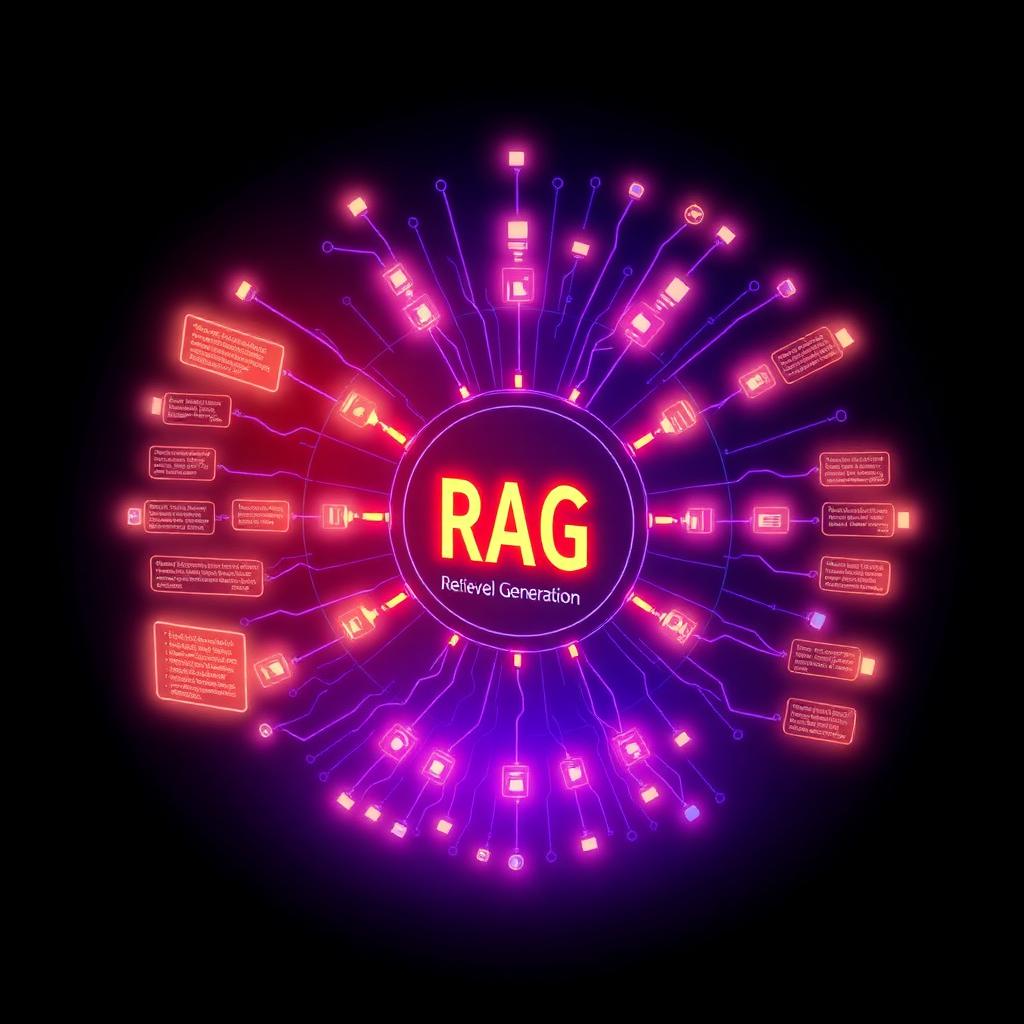
Our reference stack for ai energy utilities has five layers: ingestion (webhooks, email, voice), retrieval (RAG over your source-of-truth systems), reasoning (a routed LLM tier), action (typed tool calls into your APIs), and observability (traces, evals, and human review queues).
The retrieval layer is where most projects live or die. Chunking strategy, embedding model, and hybrid keyword + vector search matter more than which LLM you pick. We publish more on this in our RAG guide.
- Ingestion: multi-channel with schema validation
- Retrieval: hybrid search + reranker
- Reasoning: routed model tier for cost control
- Action: typed tools with idempotency keys
- Observability: traces, evals, human queue
KPIs for utilities operations
The metrics that matter aren't model-level. They're business-level: resolution rate, time-to-value, cost per successful action, and CSAT delta. Track them per workflow, not per agent.
For utilities operations specifically, watch for silent failures: cases where the agent completes a task but the downstream system didn't reflect the change. Reconciliation jobs catch these.
- Resolution rate per workflow
- Cost per successful action
- Escalation rate + escalation quality
- CSAT / NPS delta vs control
- Silent-failure rate (reconciliation)
Rollout plan
Start narrow. Pick one workflow inside utilities operations with clean data and a measurable outcome. Ship a shadow deployment where the agent runs in parallel with humans but doesn't act. Compare outputs for two weeks, then flip to co-pilot mode, then to autonomous with human review on low-confidence cases.
Most teams try to boil the ocean and stall. The teams we work with at CapraZone hit ROI in weeks by narrowing to one wedge, then expanding.
- Week 1-2: shadow mode, no writes
- Week 3-4: co-pilot mode, human approves
- Week 5+: autonomous with review queue
- Expand to adjacent workflow only after KPI hits target
Common failure modes
The three failures we see most often: over-scoped v1, missing evals, and no rollback path. Each is preventable with a week of upfront design.
For ai energy utilities, the specific trap is assuming your existing process is documented. It almost never is — the tacit knowledge lives in tenured operators. Interview them before you write the first prompt.
- Scope creep in v1 (pick one wedge)
- No offline eval suite (build 50 golden cases)
- No rollback / kill switch
- Prompts written without operator input
Where the value actually comes from
Teams evaluating ai energy utilities usually start with a tooling question — which platform, which model, which vendor. That is the wrong first question. Value in this category comes from three compounding sources, and none of them are the tool itself: the volume of repetitive decisions you can move off human queues, the latency you remove between an event happening and someone responding to it, and the consistency you gain when the same policy is applied to every case rather than the version each operator remembers.
Quantify those three before you shortlist anything. Count the decisions per week, measure the median response delay, and sample fifty recent cases to see how often the handling actually matched policy. In most organisations that exercise alone surfaces a number large enough to fund the entire programme, and it reframes the project from "we should try AI" to "we are losing a specific, measured amount of margin every week and here is the mechanism".
The second reframing matters just as much. AI Agents for Energy & Utilities is not a replacement programme; it is a capacity programme. The teams that get the strongest returns keep headcount flat and redeploy the recovered hours into work that was permanently backlogged — win-back campaigns, data hygiene, proactive outreach, quality review. That is where the compounding shows up in the P&L, and it is why our AI agent engineering practice scopes every engagement around a redeployment plan rather than a reduction target.
- Decisions per week that follow a documented rule
- Median delay between trigger event and first response
- Policy-adherence rate across a fifty-case sample
- Cost per handled case, fully loaded
- Backlogged work you would fund with recovered hours
A realistic rollout sequence
Week one and two are discovery and instrumentation. You are not building yet — you are shadowing the people who do the work today, recording how they actually decide, and wiring the measurement so you can prove change later. Skipping this is the single most common reason ai energy utilities projects stall: without a baseline, every subsequent conversation about impact becomes an argument about anecdotes.
Weeks three and four produce a suggest-only version. The system runs on live traffic, produces its recommended handling, and a human accepts, edits or rejects it. Every one of those judgements becomes a labelled example. You are simultaneously delivering value — the operator's draft is written for them — and building the evaluation set you will need to justify autonomy.
Weeks five and six graduate the highest-confidence, lowest-blast-radius slice to autonomous handling behind a kill switch, with the remainder still routed for review. From there, expansion is a data-driven negotiation: each category earns autonomy when its accuracy on held-out cases clears the threshold you agreed in week one. Most teams reach 40–70% autonomous handling within a quarter, and the remaining cases stay human because they should.
- Weeks 1–2: shadow the process, instrument the baseline
- Weeks 3–4: suggest-only on live traffic, capture every correction
- Weeks 5–6: autonomous on the safest slice, behind a kill switch
- Quarter 2: expand category by category on measured accuracy
Frequently asked questions
How long does a ai energy utilities rollout take?
Typical wedge deployments ship in 4-8 weeks. Full rollout across a business unit is 3-6 months depending on data readiness.
What's the ROI benchmark?
We target 5-10x cost payback within the first year on properly scoped wedges. Higher for high-volume workflows.
Do we need to replace our existing systems?
No. Agents sit on top of your systems of record via APIs. Rip-and-replace is almost never the right first move.
How do you handle compliance?
Every action is logged with input, tool call, output, and reviewer. That trail is what auditors care about, and it's what makes iteration safe.
What is the smallest useful first version of ai energy utilities?
A single high-volume category, handled in suggest-only mode on live traffic, with every human correction captured as a labelled example. That version is typically live in three to four weeks and already saves drafting time while it earns the data for autonomy.
How do we avoid getting locked into one model or vendor?
Keep policy, retrieval and orchestration in your own code and treat the model as a swappable component behind an interface. Maintain an evaluation set so switching is a measured decision rather than a leap of faith.
What does CapraZone actually deliver at handover?
Source code, infrastructure as code, the evaluation suite, the observability dashboard, runbooks for every failure mode, and a training session for the internal owner. You can operate it without us, and many clients do.